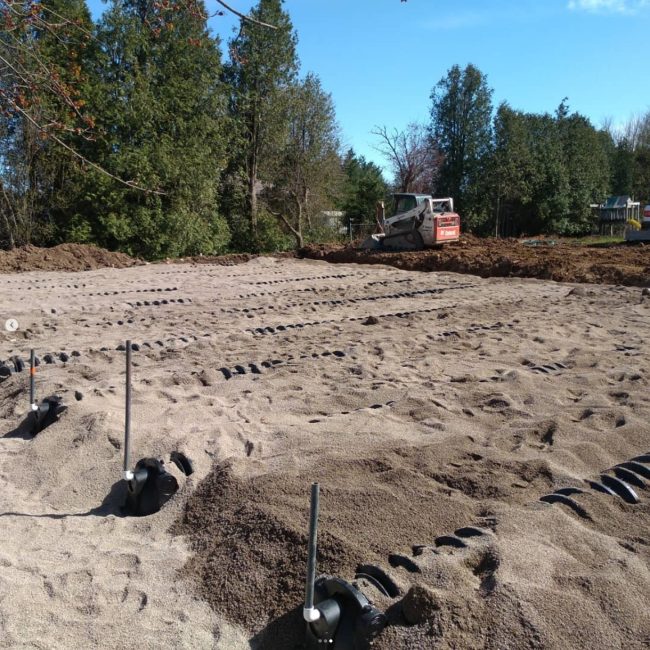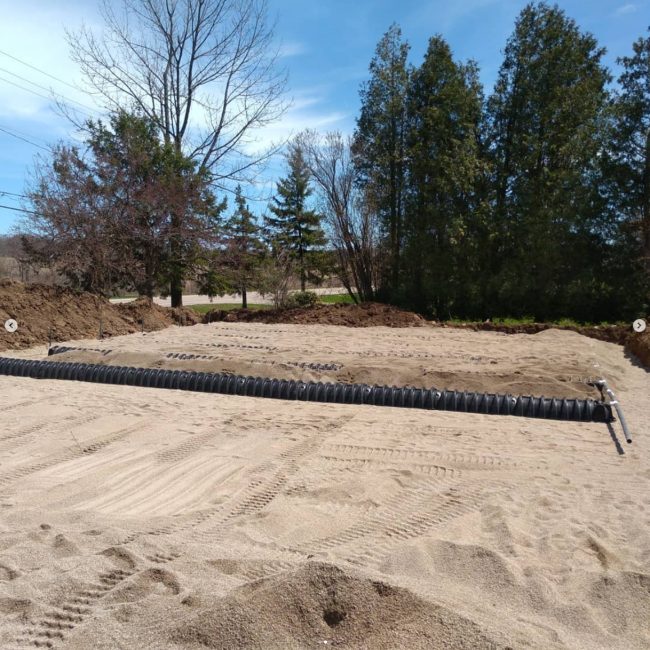
Shallow buried trench leaching beds
A compact, pressurized distribution approach that depends on treatment, dosing, layout, soil and careful construction working as one system.
What an SBT system does
A shallow buried trench bed distributes treated effluent through small orifices in pressurized laterals. Timed doses spread loading across the bed instead of sending a large intermittent volume to one area.
The parts have to work together
- Treatment appropriate to the approved system
- A pump chamber, controls and timed dosing
- Pressure distribution designed for even delivery
- Trenches, laterals and inspection or flushing access
- Suitable native soil or approved leaching-bed fill
- Cover, grading and drainage that protect the bed
Why it may be considered
An SBT can offer a compact layout with useful flexibility on some constrained sites. It is not a shortcut around site evaluation, setbacks, soil requirements, treatment or an approved design.
How it differs from other bed layouts
The existing technical page distinguishes an SBT's timed, pressurized distribution from conventional gravity distribution. Raised or mounded beds address a different set of grade and separation conditions. An SBT may use suitable native soil or approved leaching-bed fill; the final selection still depends on site testing, setbacks, groundwater and the approved Part 8 design.
Construction details matter
Trench elevation, lateral placement, orifice orientation, dosing controls, inspection access, fill placement and final grading affect whether the built system matches the design. Alpha's septic and excavation work meet at that construction boundary.
A technical option, not a product pitch
Whether an SBT system is appropriate depends on the property and approved design. Start with the serious septic hub for the broader decision, or provide site context for a project-specific discussion.