
Septic systems designed for the site—and built to work.
New system, failed system or difficult property: start with the site conditions and route the job to the right design, construction or diagnostic path.
Choose the problem, not a list of services
Different septic situations need different first steps.
New system or replacement
Site review, design, permit support and construction for a system that fits the property.
A system that is not working
Diagnose the cause before deciding between repair, reconstruction and replacement.
Difficult site or compact footprint
Review advanced treatment and technical options where ordinary layouts do not fit.
Hamilton-area work
See the regional route to serious septic work and supported local examples.
The drawing and the ground must agree
The building, daily design flow, soil, elevations, setbacks, access and drainage all influence the system. Alpha combines septic planning with excavation experience so buildability is considered before the machine starts digging.
When an ordinary layout does not fit
Raised and filter beds, shallow buried trench systems, advanced treatment, pump-dosed systems and careful grading can be relevant on constrained properties. The correct option depends on the property and approved design—not a preferred product.
Regional routes without duplicated advice
Regional pages provide local context and project examples while design, repair and technical pages answer the detailed questions they own best.

Septic planning, permits and construction
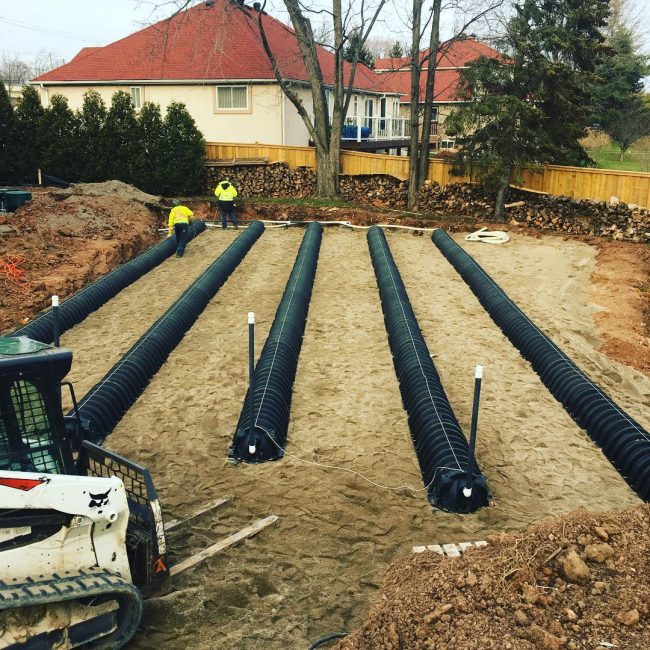
A septic system has to fit the property, not just a drawing. Daily design flow, soil conditions, elevations, setbacks, drainage, access and the intended use of the site all affect the approved layout. Alpha Ex can help a project move from site review and practical planning through permit-support information, construction, inspection coordination and final grading.
For Ontario projects, the system also has to be designed and built to the applicable Ontario Building Code requirements. Tank sizing, leaching-bed type, treatment requirements, separation distances and finished grades need to make sense together before excavation begins.
Replacement, repair and difficult properties
When an existing system is backing up, surfacing, smelling, settling or failing inspection, diagnosis comes before a replacement decision. Some issues involve piping, headers, pumps, drainage or a localized section of the bed; others require a complete replacement plan. The site review should distinguish those paths before work is scoped.
Constrained sites can require raised or filter beds, shallow buried trench systems, advanced treatment, pump-dosed distribution, careful soil preparation and deliberate grading. The suitable option depends on the approved design and the actual site conditions, including difficult soils, groundwater, slopes, limited access and an established property layout.
Useful septic resources
- Septic repair and diagnosis
- Signs of septic system failure
- Shallow buried trench leaching beds
- Hamilton septic inspections
Project evidence