
Septic Bed Sand Mantles, Topsoil Cover, and Final Grading | Alpha Ex
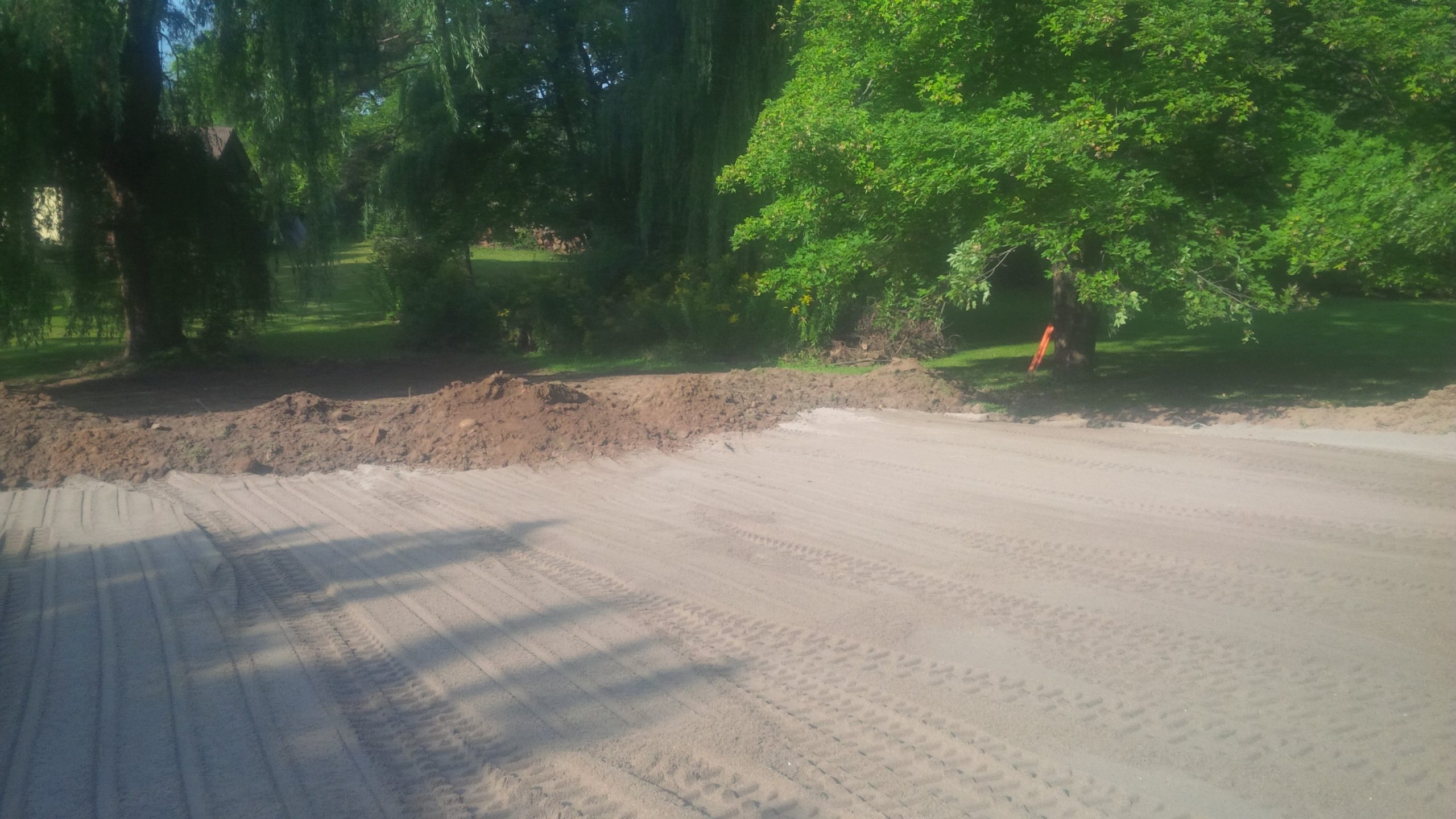
A septic bed is not finished when the pipe and sand are installed. The final grading, sand mantle, topsoil cover, drainage, and surface restoration all affect how the system performs and how the property looks when the work is complete.
This project in Dundas, Ontario shows a septic bed sand mantle at the stage where topsoil is being placed and blended into the surrounding grades. This is an important part of septic construction because the finished surface has to protect the septic bed, shed surface water properly, and leave the yard usable.
What Is a Septic Bed Sand Mantle?
A sand mantle is the imported sand area placed as part of a septic leaching bed system. Depending on the approved design and site conditions, the sand mantle may help provide treatment area, support final dispersal, and create the required separation between the wastewater distribution system and the native soil conditions below.
On many properties, the septic bed is raised above the original ground. This can happen because of soil conditions, high groundwater, shallow limiting layers, poor native soil, or code requirements. When that happens, the system has to be shaped carefully so it functions properly and still fits into the property.
Why Final Grading Matters
The final grade over and around a septic bed is not just cosmetic. It controls how rainwater and snowmelt move across the property. Poor grading can direct extra water onto the septic bed, overload the area, create soft or wet spots, or cause erosion around the system.
A properly finished septic bed should be shaped so that surface water drains away from the treatment area. The topsoil cover should support grass growth while still protecting the function of the system underneath. The finished yard should look intentional, not like a pile of sand was left behind.
Can Topsoil Go Over a Septic Bed?
Yes, topsoil is commonly placed over septic bed areas as part of final restoration, but it must be done carefully. The amount of cover, the type of material, the grading, and the equipment used all matter. Heavy equipment, deep compaction, poor drainage, or the wrong cover depth can damage the system or reduce its performance.
The goal is to protect the septic bed while allowing the area to be restored with grass or suitable vegetation. The finished surface should be stable, properly sloped, and protected from vehicle traffic unless the system has been specifically designed for that load.
Raised Septic Beds Need Careful Machine Work
Many septic systems are built above the original ground surface. This is common where the property needs imported sand, a raised leaching bed, a filter bed, a shallow buried trench system, or advanced treatment. These systems require careful excavation, material placement, and shaping.
Alpha Excavation & Contracting understands septic systems from both the design and construction side. That matters because a septic drawing has to become a real system in real ground. The sand, elevations, slopes, cover, tank placement, pump lines, access lids, and final grading all have to work together.
Blending the Septic Bed Into the Property
A good septic installation should not feel like an afterthought. On many properties, the septic bed becomes a major part of the finished landscape. The way it is graded determines whether the yard can be maintained, whether water drains properly, and whether the system fits naturally into the site.
Where possible, Alpha works the septic bed into the surrounding grades so the finished area is functional, protected, and visually reasonable. The goal is not only to install the system, but to leave the property in a condition that makes sense for the owner.
Serving Dundas, Hamilton, Ancaster, Burlington, and Surrounding Areas
Alpha Ex installs and works with septic systems across Dundas, Hamilton, Ancaster, Flamborough, Burlington, Halton, Haldimand, Brant, and surrounding rural properties. We regularly deal with sand mantles, raised septic beds, filter beds, shallow buried trench systems, advanced treatment systems, septic replacements, and difficult grading conditions.
Planning a Septic System or Dealing With a Raised Bed?
If you are planning a new septic system, replacing an old system, building an addition, or trying to understand why your septic bed has to be raised, the first step is understanding the site. Soil conditions, elevations, drainage, available area, setbacks, and permit requirements all affect the final design.
Send us the property address and a short description of what you are planning or what problem you are trying to solve. We can help you understand whether a raised septic bed, sand mantle, filter bed, shallow buried trench system, or advanced treatment system is likely to make sense for the property.